Manual handoffs hide the real cost.
Teams move data between inboxes, spreadsheets, and disconnected tools. Work gets done, but nobody can see the operating debt.
AI Systems Architecture
For Austrian and DACH companies deciding whether an AI pilot is ready, controllable and worth taking into production.

Teams move data between inboxes, spreadsheets, and disconnected tools. Work gets done, but nobody can see the operating debt.
AI can look impressive while ownership, review gates, and measurable business value remain undefined.
When decisions live in local files and informal approvals, automation accelerates ambiguity instead of performance.
The bounded entry point
The Architecture Mandate gives decision-makers a bounded view of one priority workflow: its authority, system dependencies, material risks, control requirements and evidence needs. The outcome is a clear decision to proceed, proceed with conditions, redesign, defer or stop.
How the work proceeds
We begin with the operating decision, not the model. The work maps who may act, where human judgement remains necessary, which systems and vendors are involved, what can fail and what evidence must exist before production approval.
One material production decision is framed and bounded, so the work stays inside a scope that executives can actually approve or refuse.
The current workflow, its hand-offs and exceptions are mapped, then authority for input, recommendation, approval and override is assigned to named roles.
System and data dependencies are identified, each material risk is connected to a preventive, detective or corrective control, and human intervention points are defined.
Required evidence before and after release is specified, target architecture options are compared without presuming implementation, and one of five decision states is issued.
Evidence, clearly classified
A focused portfolio of decision work and ventures, each described according to its actual role and current maturity.
A bounded working example shows how authority, material risks, operating controls and evidence requirements can be assembled before a production decision.
Venture concept · evidence-led operationsA concept for traceable savings decisions that brings source data, assumptions, management review and unresolved uncertainty into one decision record.
Venture concept · controlled workflowsA workflow automation concept designed around accountable ownership, approval gates, exception handling and evidence that an operating team can inspect.
Venture concept · property operationsA property operations system concept for turning fragmented tasks, approvals and asset records into an accountable operating workflow.
Co-founded venture · laboratory infrastructureAn Austria-focused, organisation-first approach to governed on-site laboratory equipment access; Ali is CTO and co-founder responsible for the technical foundation and controlled workflows.
Co-founded venture · explainable market intelligenceA market-intelligence product connecting public signals across research, hiring, procurement and partnerships; Ali is co-founder for business and partnerships.
Decision notes
Decision notes for leaders responsible for AI systems in production: architecture, authority, controls, integration dependencies and operational evidence.
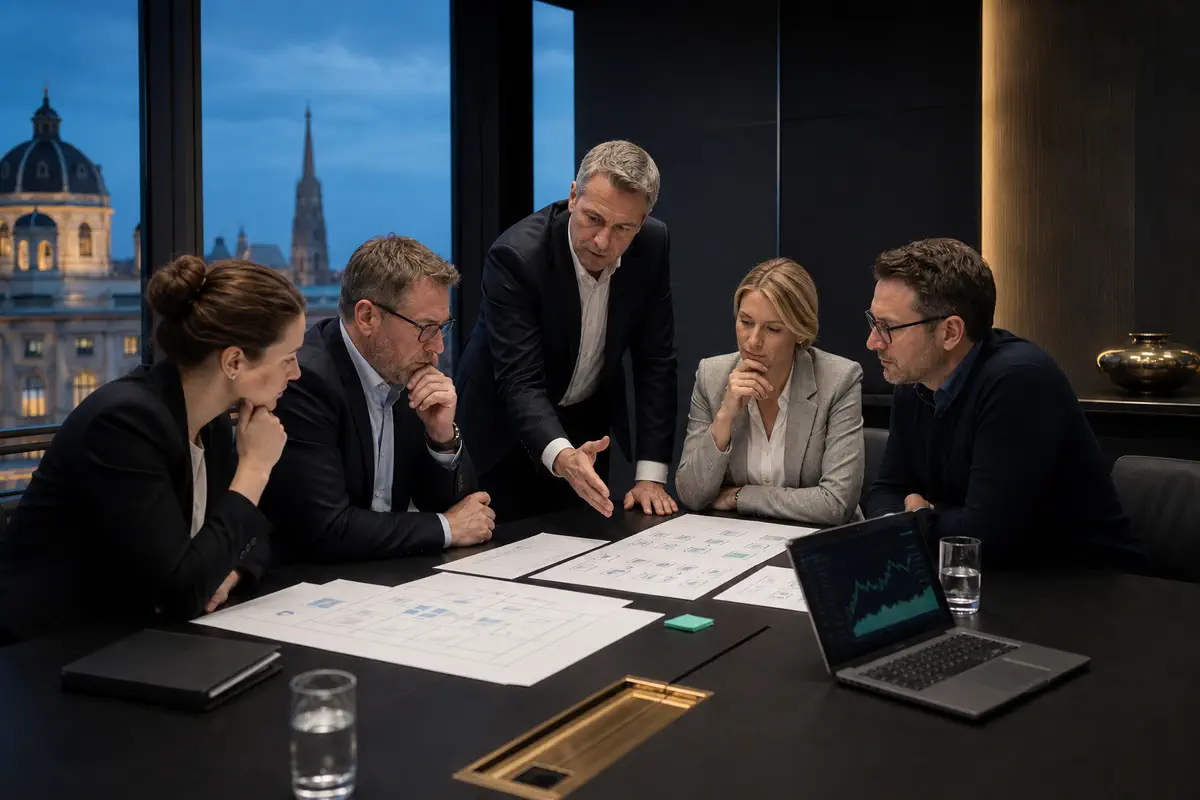
A practical AI change-control guide for Austrian leaders deciding whether a model, prompt, data source, tool or agent-authority update remains inside the approved change envelope. It provides six classification triggers, four release decisions, a minimum change record and a 30/60/90-day operating roadmap, while separating management method from legal assessment.

A decision framework for Austrian leaders who must determine whether one AI pilot should proceed, proceed with conditions, be redesigned, be deferred or stop before production spend. Includes a six-domain scorecard, evidence pack and 15-20-business-day decision path.

What Article 50 requires from chatbots and generative AI from August 2026: provider/deployer roles, user disclosure, machine-readable marking, evidence and a 14-day DACH action plan.

A practical AI agent monitoring and observability framework for DACH SMEs: connect mission, accepted outcomes, evidence, tool authority, human intervention, drift, evaluation probes, alert decisions and cost through a production-ready 30/60/90-day operating system.
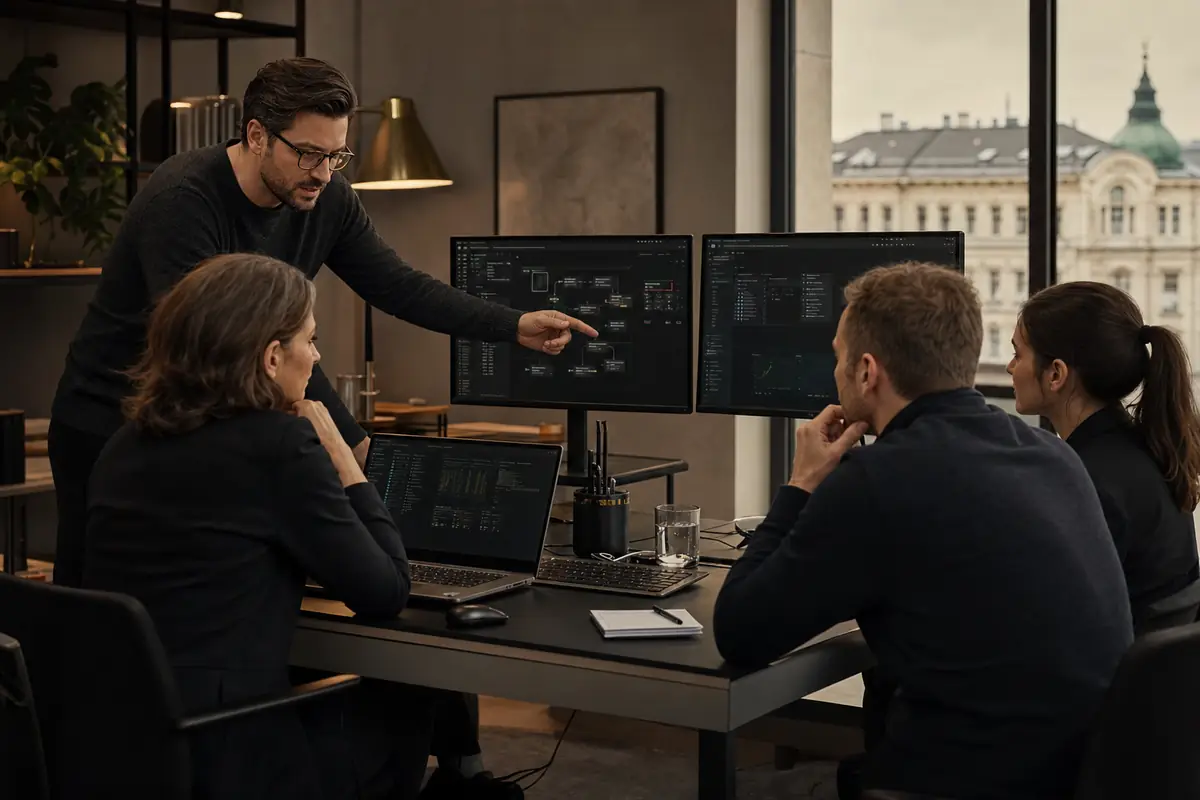
A practical AI agent evaluation framework for DACH SMEs: test capability, grounding, authority, security, resilience, human handoff and business outcomes; separate challenge from development; and govern release, regression and evidence through a 30/60/90-day operating system.
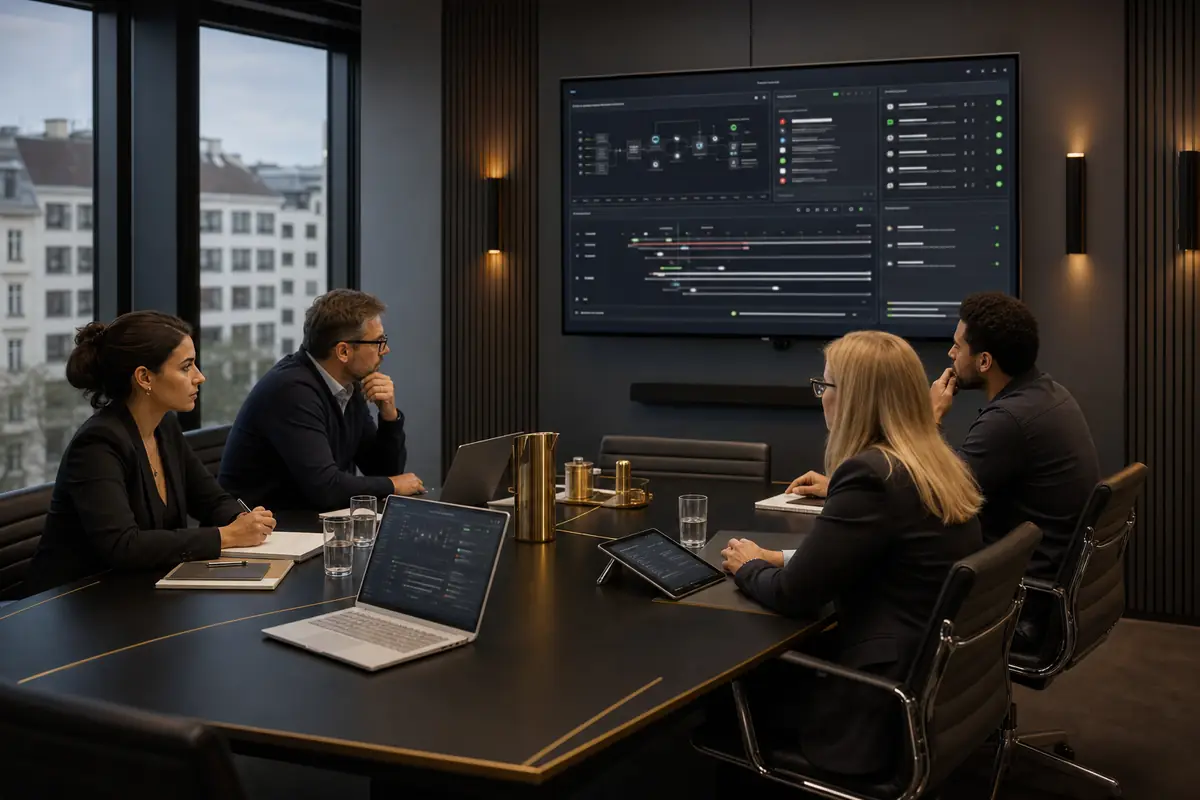
A practical AI incident response plan for DACH SMEs: contain identity and tool authority, preserve an AI evidence pack, make defensible first-hour decisions, assess the NIS2 24-hour path, and restore workflows through accountable recovery gates.

A practical guide to AI workload routing and AI model router design: classify each task by risk and quality, control fallback and human approval, and measure model, review, and rework cost per accepted outcome before AI spend scales.

A practical AI agent gateway guide for business leaders: map MCP traffic, separate the gateway from the control plane, enforce runtime policy, trace cost and outcomes, test an emergency stop, and follow a measurable 30/60/90-day rollout.
About the practice
Ali Najafzadeh is an independent AI systems architect in Vienna. He helps executive and operational teams turn a consequential AI pilot into an inspectable production decision, while bringing in specialist partners only where the agreed scope requires them.
Ali NajafzadehStart with one decision
Bring one priority workflow, the decision in front of you and the known dependencies. The first conversation only determines whether an Architecture Mandate is the right next step.
A short operating snapshot makes the first conversation useful.
Please do not submit confidential, personal or security-sensitive information through this form. A suitable confidential channel can be agreed after the initial qualification.